A few favourite
Resources
There is a wealth of information on the Information Superhighway, but these are some of the references and creators I have found consistently helpful as I learn
❇︎ WHO TO TRUST WITH YOUR TIME ❇︎
Where to find out more about everything
This will be a list I try to keep updated, including some of the tools and websites I use frequently, books and blogs I have used as I learn, organizations that have offered helpful webinars, plus a few content creators on YouTube.
To begin, (and for transparency,) I’ll introduce you to Pollinator Partnership. I have created this website in part as my final outreach project for their Pollinator Stewardship Certification. However, I am presenting everything else in no particular order, and obviously the list is non-exhaustive.
I also hope to give enough descriptive information about each resource linked, and how I have personally found them useful, to help you choose the resource that might best answer your questions.
If you are a representative of any of these organizations, or are one of the creators mentioned, and feel that I have mischaracterized your work in any way, please get in touch so that I can make corrections and improve this resource!
WHEN, LIKE ME, YOU DON’T HAVE AN ECOLOGY DEGREE
Organizations Doing Education And Outreach
Pollinator Partnership
An org that takes a holistic approach to conservancy, building their programs by way of collaboration with people on all sides of the issues. They work with home gardeners, landscapers, farmers, land-managers, and large industry to create educational tools around the need for pollinator-safe practices, but that also address the obstacles that typically prevent their adoption. Their goal is to help pollinators and their ecosystems thrive, as well as the people who produce our food and our built environment.
The certification I completed through Pollinator Partnership Canada was composed of webinars, a practical project, and an outreach component.
David Suzuki Foundation
David Suzuki, through his program The Nature of Things, has helped generations of Canadians appreciate and become passionate about the environment. Since 1990, the David Suzuki Foundation has worked with other non-profits, community organizations, governments of all levels, businesses, and individuals to educate and conserve the environment.
My personal involvement is through one of their citizen-science projects: Butterflies In My Backyard.
Canadian Wildlife Federation
On top of their conservation work, the Canadian Wildlife Federation offers webinars, searchable directories of native plants and native plant suppliers, resources for educators, and garden certification. They are also one of the partners behind the creation and operation of iNaturalist Canada.
Theirs was the first certification I sought out for my property, and I found a lot of useful information here as I began to transition to native plants. I also participate in a couple of their projects on iNaturalist: CWF’s Gardening for Wildlife, and The CWF Great Canadian BioBlitz | Le Grand Bioblitz canadien de la FCF.
National Wildlife Federation
While they are on many levels the American counterpart to the Canadian Wildlife Federation, the National Wildlife Federation also collaborates with conservationists in Mexico and Canada, since migratory animals are not hindered by political borders. They too offer webinars, and have resources on their website that I found useful as I was starting out, such as: Small Space Gardening, and Ecological Landscaping.
Theirs was the second certification I sought out for the property.
Xerces Society
This org is focused entirely on invertebrates, and while they are largely US-focused, their website is full of useful information for home gardeners. What I have found even more enjoyable, though, is their YouTube channel, where they bring in a wide variety of entomologists to discuss their area of study, under the title Bug Banter. A particular favourite was one of the episodes with Dr. Jessica L. Ware, (a wonderful Canadian entomologist and evolutionary biologist,) about dragonflies and damselflies.
Learning more about the needs, behaviours, and life cycles of the insects I want to attract has helped me make better choices in my gardening.
Depave
I first encountered Depave in someone else’s webinar, and though they are Oregon-based and US-centred, their information about urban heat islands, and template for how to organize locally around transforming paved landscapes is important and inspiring.
I have personally improved the drainage on my own property by installing rain gardens with native plants, and as extreme weather increasingly threatens to bring urban flooding, perhaps this is a model we might adopt more widely here.
The North American Native Plant Society
Based out of Toronto, NANPS has all sorts of resources on their site, including tips for seed saving, and how to achieve cold seed stratification indoors. They also hold annual plant sales in Toronto, and have a lovely quarterly journal called The Blazing Star. They host webinars, the cost of full membership is very affordable, and they are branching out into deeper advocacy efforts.
Bee City Canada
An organization that offers recognition to communities, schools, and organizations that are committed to pollinator-friendly initiatives. They have a series of webinars and other resources, and their focus is on creating long-term community efforts, and inspiring the participants to educate and inspire others.
Nature Canada
This organization has a lot less to do with home gardens than these other sites; however, they are offering (among many things) toolkits for municipalities to adopt nature-based climate solutions.
Unlike other individual-level climate actions, even a small home garden, or a boulevard garden DOES make a difference. If you are motivated to push your local government to do better, this is an excellent org.
BECOMING MORE GRANULAR, OR LOOKING BEYOND YOUR OWN GARDEN
Blogs, YouTube Channels, and Other Online Resources
The iNat Blog/Forum
Separate from the individual projects and users’ observations pages, iNaturalist also has a blog and a community forum. The blog covers topics everywhere from the platform itself, to the impact citizen science has on research, as well as some of the blindspots we might have for certain organisms, if they are abundant in our environment.
The iNat Forum allows users to ask and answer questions on all sorts of topics! There is also a section for educators.
Backyard Ecology
This is a YouTube channel and online community, and though they are based in the Eastern US, we have many plants and insects in common. This is one of the first YouTube channels I began watching regularly, and I appreciate the deadpan dad-humour aspect to it, too.
He posts useful profiles of native plants and their ecological use, and he helped me understand what makes a keystone species. He also offers book recommendations on his website.
Butterflies of Ontario
This site is created and maintained by Rick Cavasin, and if you are interested in making accurate identifications of the butterflies that visit your garden, it is extremely helpful. It was Rick who helped me learn the distinctions between Swallowtails, or at least how to make your best guess.
He also has guides and websites for other parts of Canada, so if you are not in Ontario, you can find them in the menu on this site.
Lady Bird Johnson Wildflower Center
I have mentioned the searchable database on this site in several places, and I use that all the time. I had not yet mentioned their articles, which I’ll link below.
Their physical location is in Texas, but the topics they cover are often related to best practices for ecological gardening, more generally.
Tri-County Master Gardeners
Many municipalities have an organized group of Master Gardeners, under the umbrella of Master Gardeners of Ontario, Inc. (MGOI). This Tri-County site covers Huron, Oxford, and Perth counties, and offers a blog, and notifications of workshops and other events.
While I am not and won’t be affiliated with them, (since I am a homebound person,) they might be an interesting option for someone looking to do a little more formal training and volunteering in the community.
Crime Pays But Botany Doesn’t
This is a more broadly-focused plant ecology YouTube channel out of the US, and usually from a vastly different growing zone than ours, but there is still a lot to take away from his videos. Aside from the humour he brings to the topic, I learned useful things about plant structure, and guerrilla gardening tactics like how best to deploy a seed bomb to avoid the plants being mown. Not that I would engage in such things.
Invasive Species Centre
This is a hugely useful site for identifying, understanding the dangers of, and removing invasive species in Canada. Since so many invasive plants are still sold in plant nurseries with no warning, this is an important tool to have on-hand!
They offer everything from webinars to technical data to a community science program.
The Arboretum (University of Guelph)
This is the website accompanying a 400-acre arboretum project, that is part of the University of Guelph. While it is used for study, it is also a place you can visit!
The website links to their research, and provides information about biodiversity and conservation, as well as things like seed collection and propagation.
Birds Canada
I’ve mentioned the Cornell Lab / Birds Canada site elsewhere with regards to citizen science, but Birds Canada itself is a marvellous conservation org, and offers lovely resources for gardening for birds.
North East Scotland Biodiversity Partnership
This obviously isn’t focused on the plants and animals in our own ecosystem, but they offer a lot of good information about wildlife gardening, and how best to support the animals who will choose to make your garden home. I like their site very much.
Garden Fundamentals
I heard Robert Pavlis speak in a NANPS seminar, and he provided a lot of useful information about soil.
He has a YouTube channel, linked below, and it covers that same information about soil science, plus many other topics, including some myth-busting of popular gardening trends.
Robert has also written several guides, and you can click through for links to those.
Gardening in Canada
Ashley is a soil scientist, and she is a YouTube creator from growing zone 3. Her channel is focused largely on food crops in the home garden, but she does also talk soil health, amendments, and other topics. I think my favourite of her videos was about the composition of common plastic containers and pots, and what the codes on the bottom might tell us in terms of leaching.
FOR RESEARCH, REFERENCE, OR JUST FOR INTEREST’S SAKE
Books, Journals, and Printed Guides
Kaufman Field guide to Butterflies of North America
Jim P. Brock & Kennedy Kaufman
There are many field guides out there, and I am not knowledgeable enough to judge which ones are best, but I own and use several of the Kaufman guides. Sometimes, it’s just so much easier to find a match to the organism you are trying to ID by flipping through a printed guide.
A Pocket Guide to Butterflies of Southern & Eastern Ontario (and Southwestern Quebec)
Rick Cavasin
This is an extremely useful (and laminated!) pocket guide for identifying butterflies in the garden or out in the field. Rick Cavasin also runs Butterflies of Ontario, which I mentioned above, and he is extremely active as an identifier on iNaturalist, too. He has been kind enough to answer my questions there, for which I am grateful! The guide is available from his site, and select other retailers.
The Blazing Star
North American Native Plant Society
This is a beautiful quarterly journal published by NANPS, which I have been enjoying for a couple of years now. On top of the plant spotlights and photos, it’s a lovely treat to sit and read when it arrives.
If you do not wish to receive the print version, you can also browse the digital archives on their site.
The Light Eaters
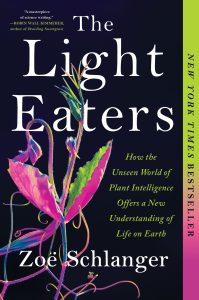
Zoë Schlanger
This is a lovely and very readable journey through the shift in how science perceives and understands plant communication, by a talented science writer.
This became a NYT bestseller for good reason.
The Ontario Naturalized Garden: The Complete Guide to Using Native Plants
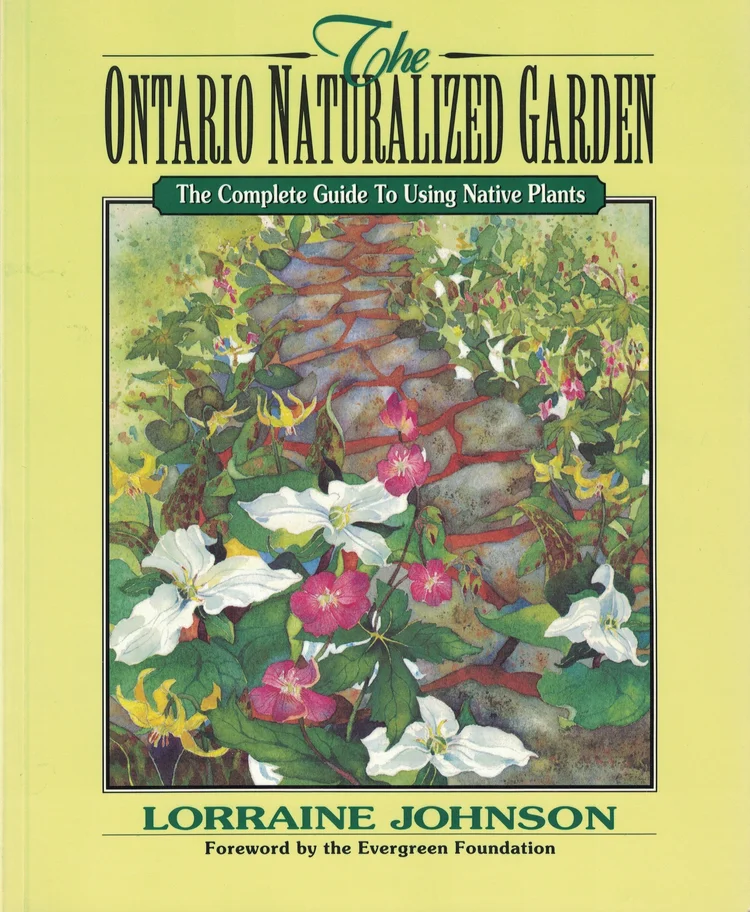
Lorraine Johnson
I love this book as a resource, because it is efficient and accessible while covering everything from ecological zones to soil composition to potential plant combinations in tricky conditions. It also gives the reader permission to make their own informed and aesthetic choices.
This is a bit older, and Johnson also has many other lovely books.
The Gardener’s Guide to Native Plants of the Southern Great Lakes Region
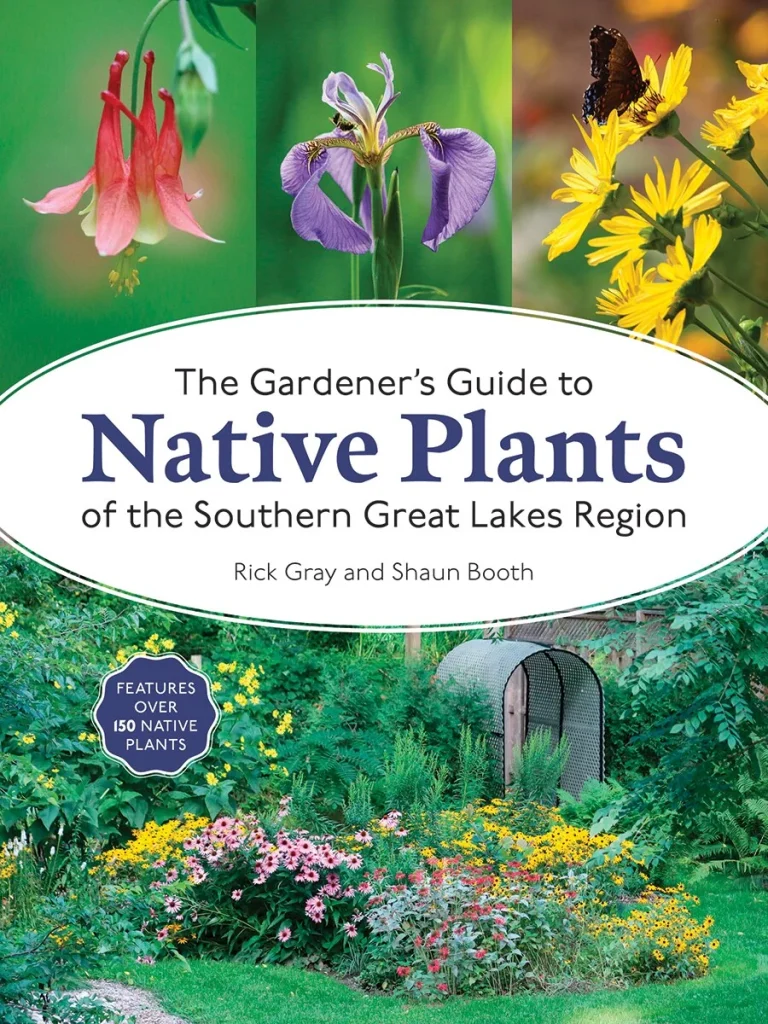
Rick Gray and Shaun Booth
This was given to me as a gift, and it is a very beautiful (and browsable) reference book for over 150 species of plant. There is useful information for each, plus some useful appendices in the back for propagation, host plants, and extra reading.
But shop local, if you can.
Fireflies, Glow-worms, and Lightning Bugs
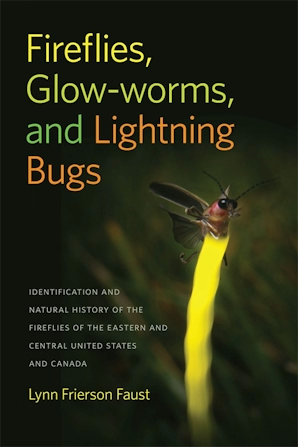
Lynn Frierson Faust
It is so difficult to tell fireflies apart! I’m still learning. This book is helping. It is full of information, and very interesting if you love fireflies and bioluminescence!
A Gardener’s Guide to Botany
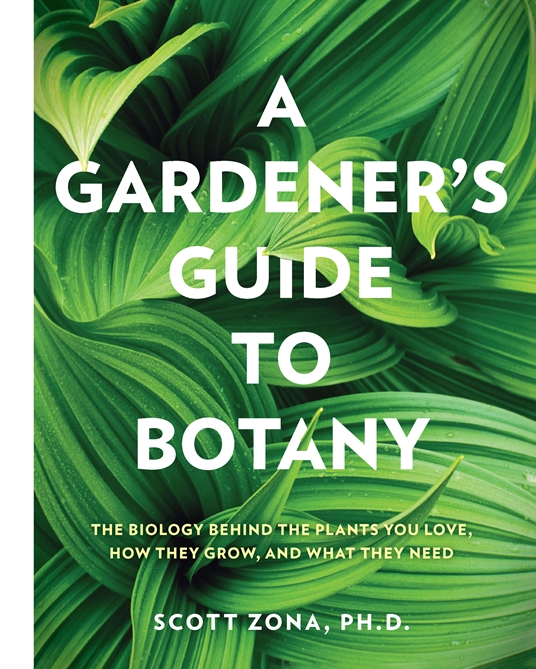
Scott Zona, Ph.D
I picked this up as a bargain book through bookoutlet.ca, and it has been useful to me! It covers all the basics, and has been useful to me as a reference book.
I have more books waiting for me on my shelf, so I will add more later!
RANDOM EXTRAS IN NO PARTICULAR ORDER!
Additional Articles, Links, and Studies
World must rewild on massive scale to heal nature and climate, says UN (The Guardian)
Mark Carney’s investment summit is bound to fail unless it faces this fundamental issue (David Suzuki Foundation)
Wild bees visit different flowers to balance diet, study shows (The Guardian)
Invasive plants are available across Canada. Is federal regulation possible? (CBC)
https://www.cbc.ca/news/science/invasive-plants-sale-federal-regulation-9.7312362
Ontario fights back against toxic invasive plant that destroys everything around it
Not All Green Space Is Created Equal: Biodiversity Predicts Psychological Restorative Benefits From Urban Green Space (Frontiers)
https://www.frontiersin.org/journals/psychology/articles/10.3389/fpsyg.2018.02320/full
The island that banned hives: can honeybees actually harm nature? (The Guardian)
Spongy Moth: Lymantria dispar (Ontario’s Invading Species Awareness Program)
Helping Homeowners help bees (Landscape Ontario)
Under the Norway Maple (Adams Garden)
https://adamsgardennativeplants.blogspot.com/2010/12/under-norway-maple.html
Operation Pollinator on Ontario farms: Growers are helping bees and butterflies – and soil health, crop production, biodiversity and landscape sustainability. (Top Crop)
https://www.syngenta.com/agriculture/environmental-challenges/biodiversity/operation-pollinator