Citizen Science and
Certifications
Whether in your own garden or out in the world, documenting the wildlife you see all around you helps to build robust data for scientists and researchers to use
❇︎ APPS AND WEBSITES ❇︎
Who can contribute and where should I begin?
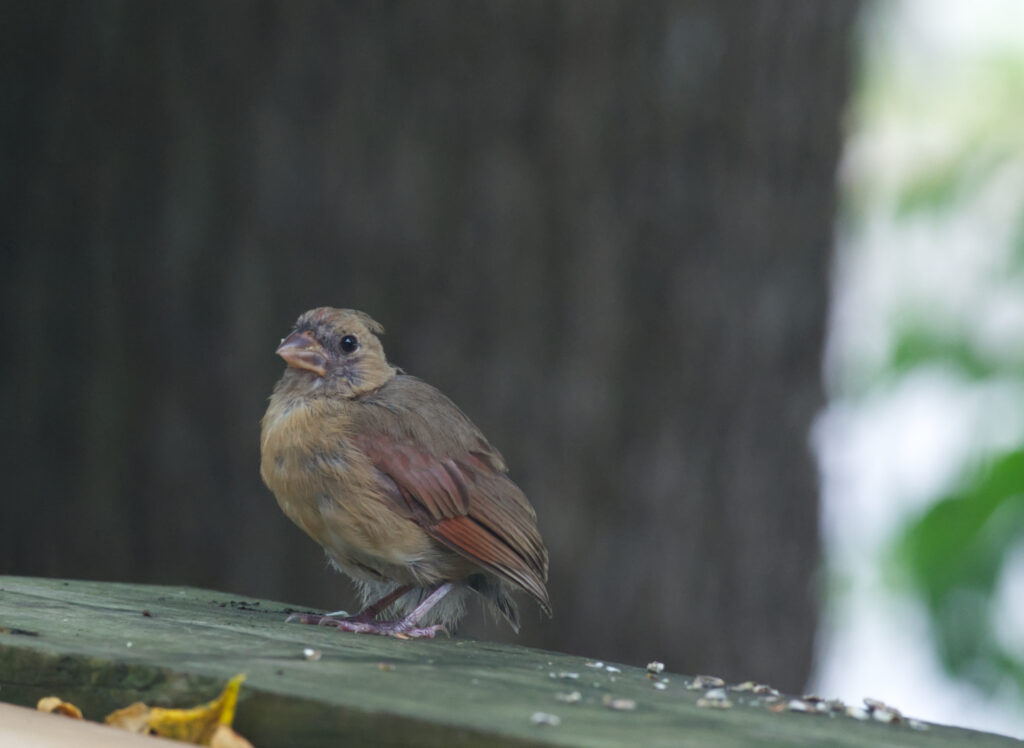
The glorious thing about community science projects is that anyone in the community may participate! I have always loved ecology, but my formal training is primarily in the arts. While I would never be hired for formal scientific field work, I can still go out in the garden, or hike at Wildwood, and take pictures of the creatures I meet there.
In my opinion, the easiest way to dive in is to begin using apps like Merlin Bird ID and eBird, or platforms like iNaturalist. Though they are also used by scientists and naturalists, these are tools that anyone can use, without necessarily being part of an organized project.
From there, joining a project can help you focus on a specific order or area that interests you!
This is a living list; I will add more information as I continue to build this site, and discover more opportunities people might enjoy
Merlin Bird ID
If you hear birds singing but do not know how to match the song to the species, you will love the Merlin app. Start it ‘listening’ to your surroundings, and it will provide you with a list of each bird it can hear and identify in the environment. This is especially useful if you’re trying to spot the bird in the trees, but aren’t sure what they might look like. It will also ID birds by photo. This app is created by the Cornell Lab, and powered by eBird.
eBird Canada
Also affiliated with Cornell Lab, eBird Canada is managed by Birds Canada, and is an easy way to keep lists, including your own ‘life list’ of all the birds you see. If you are using the Merlin app, you can link the two together! Submitting your sounds and images contributes to global bird research, and ultimately assists in education and conservation efforts.
iNaturalist Canada
Available on mobile or on desktop, iNaturalist is a platform that allows anyone to upload images and sounds of any wild plant, animal, or fungus that they see—not just birds. It is a global and multilingual site, but the Canadian iNaturalist is managed by the CWF, Parks Canada and NatureServe Canada. Many orgs that run specific projects also use iNaturalist to collect your data! Once you get the hang of the platform, this is a wonderful tool to help you learn.
❇︎ NARROWING YOUR FOCUS ❇︎
How do I find specific projects?
Once you dip into the world of community science, it becomes much easier to find the kinds of projects that you might enjoy. Some are as narrow as tracking certain orders of insect, some are specific to geographic areas, and some are broad, nation-wide challenges to record as many wild organisms as you can inside a set period of time.
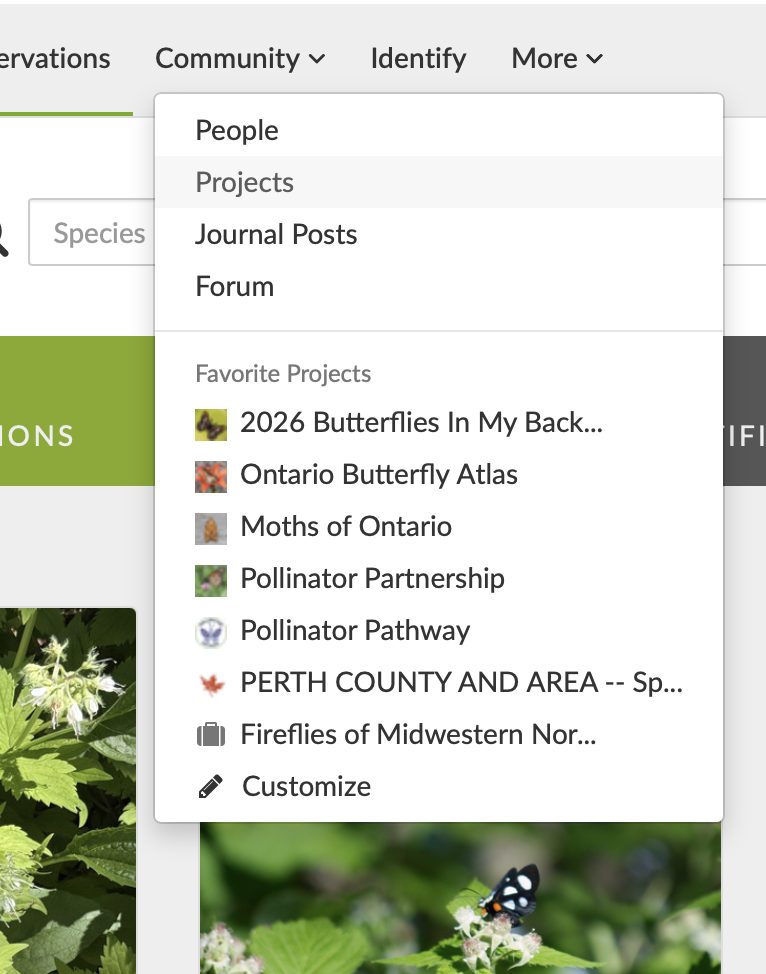
I found my first project by way of an email from The David Suzuki Foundation, but on iNaturalist it is easy to browse for new projects. On desktop, click on “Community” in the header, and then choose “Projects”. (It will also show shortcuts to seven you have already joined. See the screenshot ➢)
Once you have agreed to a project’s parameters and joined, you can add an observation to it manually, or else the platform will often automatically add your observation to the applicable projects for you.
I recommend taking a look at iNaturalist’s wealth of ‘how-to’ documents and videos, as well as those on the project pages, to learn tips for using the platform and providing what’s needed in order to easily make an identification.
❇︎ FULL DISCLOSURE ❇︎
What did you mean by ‘Certifications’?
This website is actually being built, in part, as my final project for my Pollinator Steward Certification through Pollinator Partnership.
When I finally began to reach my basic goals for the property, in terms of removing invasive species, planting native plants, and providing water sources and places for animals to hide and nest, I certified the garden. First, I completed the Canadian Wildlife Federation application, and then that of the National Wildlife Federation. That means I have self-assessed the features of my garden against their respective checklists, and they have added me to their maps of wildlife-friendly gardens. I also ordered their official signage, which is probably how you found me in the first place! Honestly, I added the signs to provide some peace of mind in the face of what I imagined could otherwise become a bylaw debacle, but what has really come out of it is regular conversations with other gardeners and neighbours who walk past. This has been hugely valuable!
Once I had really submerged myself in the research of this project, it was time to try to acquire some certifications for myself, too.
I have spent the past year working toward the Pollinator Steward Certification. This has been a hugely useful programme that began with a series of webinars. They got into the specifics of identifying different types of bees, learning their lifecycles, the various human and natural pressures that threaten them, and how to support them once you have attracted them to your property. We covered the wealth of non-bee pollinators, which includes not only other insects, but birds and mammals too. We also discussed stewardship of the land from an Indigenous perspective, and practical steps toward ensuring your garden project can thrive.
The second stage was a practical project. For me, as a homebound lady, it needed to be here on the property. I know that there are already some existing plantings around town that were made as part of previous Pollinator Partnership cohorts, and I believe at least one was even planted in conjunction with the City.
I had planned to finish ripping up the grass out on the point of the property, and make that my practical project, but then something happened at the beginning of the year. One of the mature City trees fell over, into the street. (Mercifully, it didn’t harm anyone! I didn’t even hear it fall.) It had already been scheduled to be removed, as well as the tree next to it, but a severe storm got to it first. Once those two trees had been properly removed and the stumps ground out, my woodland garden was mostly gone. Not only that, the light reaching that area was different! So redesigning and replanting that north garden became the priority and my practical project. More on that to come, below!

